Archives
- 2026-05
- 2026-04
- 2026-03
- 2026-02
- 2026-01
- 2025-12
- 2025-11
- 2025-10
- 2025-09
- 2025-03
- 2025-02
- 2025-01
- 2024-12
- 2024-11
- 2024-10
- 2024-09
- 2024-08
- 2024-07
- 2024-06
- 2024-05
- 2024-04
- 2024-03
- 2024-02
- 2024-01
- 2023-12
- 2023-11
- 2023-10
- 2023-09
- 2023-08
- 2023-07
- 2023-06
- 2023-05
- 2023-04
- 2023-03
- 2023-02
- 2023-01
- 2022-12
- 2022-11
- 2022-10
- 2022-09
- 2022-08
- 2022-07
- 2022-06
- 2022-05
- 2022-04
- 2022-03
- 2022-02
- 2022-01
- 2021-12
- 2021-11
- 2021-10
- 2021-09
- 2021-08
- 2021-07
- 2021-06
- 2021-05
- 2021-04
- 2021-03
- 2021-02
- 2021-01
- 2020-12
- 2020-11
- 2020-10
- 2020-09
- 2020-08
- 2020-07
- 2020-06
- 2020-05
- 2020-04
- 2020-03
- 2020-02
- 2020-01
- 2019-12
- 2019-11
- 2019-10
- 2019-09
- 2019-08
- 2019-07
- 2019-06
- 2019-05
- 2019-04
- 2018-11
- 2018-10
- 2018-07
-
The scattering operators associated to are defined
2024-03-19
The scattering operators associated to are defined as follows: for any and , , , there exists a unique solution to the following equation such that Then the scattering operator is defined by Here is an elliptic pseudodifferential operator of order , which is conformally covariant on the boundary. Mo
-
Because activation of HT A receptor is capable of facilitati
2024-03-18
Because activation of 5-HT2A receptor is capable of facilitating dopamine cell activity and dopamine release (Bortolozzi et al., 2003), and this action of dopamine is known to mediate rat maternal behavior, especially maternal motivation (Afonso et al., 2007, Febo et al., 2010, Li and Fleming, 2003,
-
Optimization of the B ring specifically targeted preventing
2024-03-18
Optimization of the B-ring specifically targeted preventing the oxidation of the ring system (). As described above, the 4-position of the phenyl ring provides the appropriate vector towards bulk solvent. - and -linked substitutions at the 4-position of the B-ring from the 4-fluoro-nitrophenyl inter
-
The authors thank Dr J Aoki
2024-03-18
The authors thank Dr. J. Aoki, University of Tokyo, for kindly providing 5E5-ATX antibody. This work was supported by a grant from the Deutsche Forschungsgemeinschaft to A.E.K. (KR4391/1-1), research grants “Primary sclerosing cholangitis” from the Deutsche Crohn-Colitis-Vereinigung and the Norwegia
-
Fucoidan Transient transfection with ATR kinase dead D A
2024-03-18

Transient transfection with ATR kinase-dead (D2475→A) [30] and ATM kinase-dead (D2870→Ala and N2875→K) [31] constructs was performed using Fugene 6 (Roche Applied Science, Indianapolis). Three microliters of fugene 6+1μg plasmid was used in transfections using 6-well plates at 2×10⁵ cells/well and a
-
br Results br Discussion AP a heterodimeric transcription fa
2024-03-18
Results Discussion AP-1, a heterodimeric transcription factor comprising various combinations of FOS, JUN, MAF, ATF, and CREB family proteins, has been known to play a pivotal role in leukocyte development for decades (Liebermann et al., 1998; Valledor et al., 1998). However, its participation
-
Finally the comparison between data obtained by
2024-03-18

Finally, the comparison between data obtained by antioxidant assays in in vitro cultured cells [11], [12] and in liposomes has disclosed the possibility to choose more confidently “the better phenolipid” of a series of fatty acids esters antioxidant derivatives. Looking at the physical parameters th
-
Hepatic inflammation and fibrosis are hallmarks of the
2024-03-18
Hepatic Endoxifen and fibrosis are hallmarks of the NASH phenotype and are thought to occur in a subset of patients with NAFLD. While it is hypothesized that therapeutic lowering of hepatic lipids will be sufficient to improve hepatic fibrosis and inflammation secondarily, this remains controversia
-
Fig shows a possible scheme of
2024-03-18

Fig. 8 shows a possible scheme of the generation of AP(+)-exosomes based on this study. In response to inflammatory stimuli, ERAP1 is secreted from ER into the extracellular milieu through the conventional secretion pathway. On the other hand, exosomes are derived from the endosomal pathway, and are
-
Some of the earliest LOX inhibitors were redox
2024-03-18
Some of the earliest 12-LOX inhibitors were redox inhibitors, including nordihydroguaiaretic Quinidine (NDGA), BW 755C, and baicalein 48, 49, 50. Redox inhibitors block the oxidation of the nonheme iron at the cataylytic site, preventing its conversion from the inactive (Fe2+) to the active (Fe3+) s
-
Ginsenosides are the major bioactive constituents of the Pan
2024-03-18
Ginsenosides are the major bioactive constituents of the Panax ginseng root, which contain many types of ginsenosides including Rb1, Rg1, Rc, and Rg3. The ginsenoside Rb1 appears to be the most abundant of the bioactive ginsenosides [15]. Rb1 exhibits antiinflammatory, anticarcinogenic, and antioxid
-
br Liver specific AHR deficiency and energy
2024-03-18
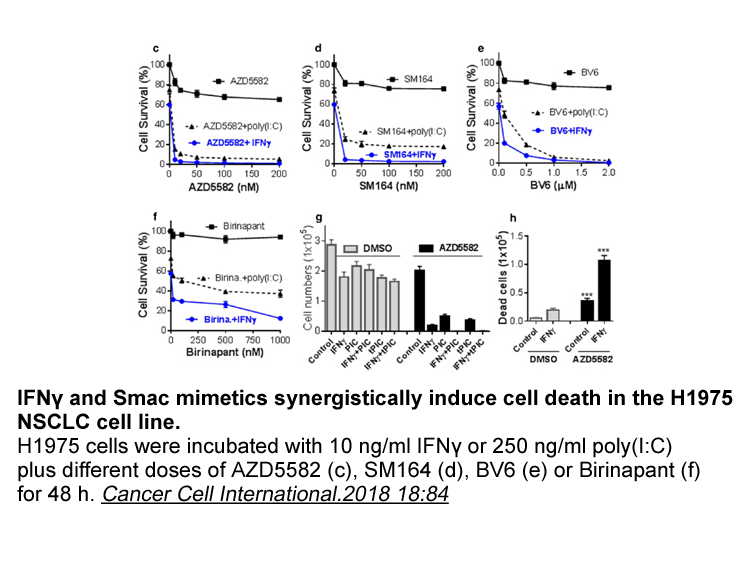
Liver-specific AHR deficiency and energy balance In contrast to the amelioration of hepatic steatosis by global AHR deficiency, targeted knockout of Ahr in hepatocytes exacerbated it in B6 mice fed on a high-fat diet, without interfering with body weight gain [21]. This appeared to result from au
-
Adiponectin belongs to the CTRP
2024-03-18
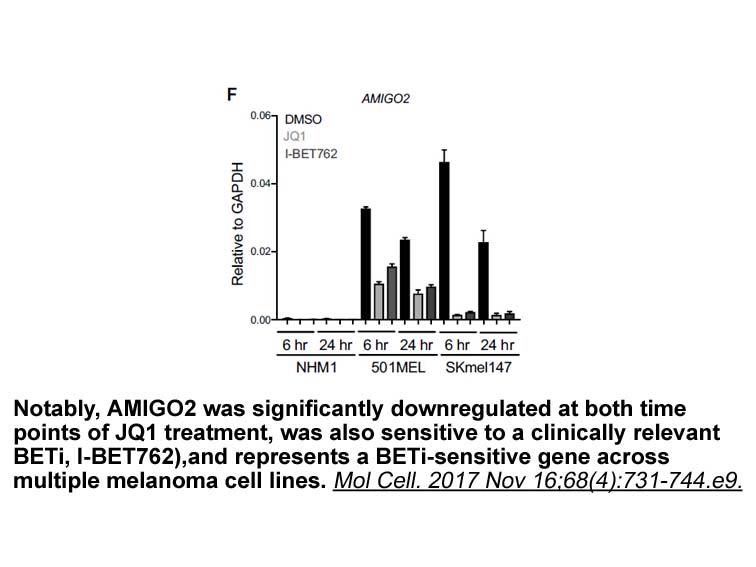
Adiponectin belongs to the CTRP (C1q/TNF-related protein) superfamily. Except for adiponectin, 15 additional members have been identified (CTRP1-15) (Schaffler and Buechler, 2012). Of all the CTRPs, CTRP9 has the highest identity to adiponectin in globular domain (Wong et al., 2009). The structure o
-
topirimate receptor A decrease in lactate concentration in t
2024-03-18
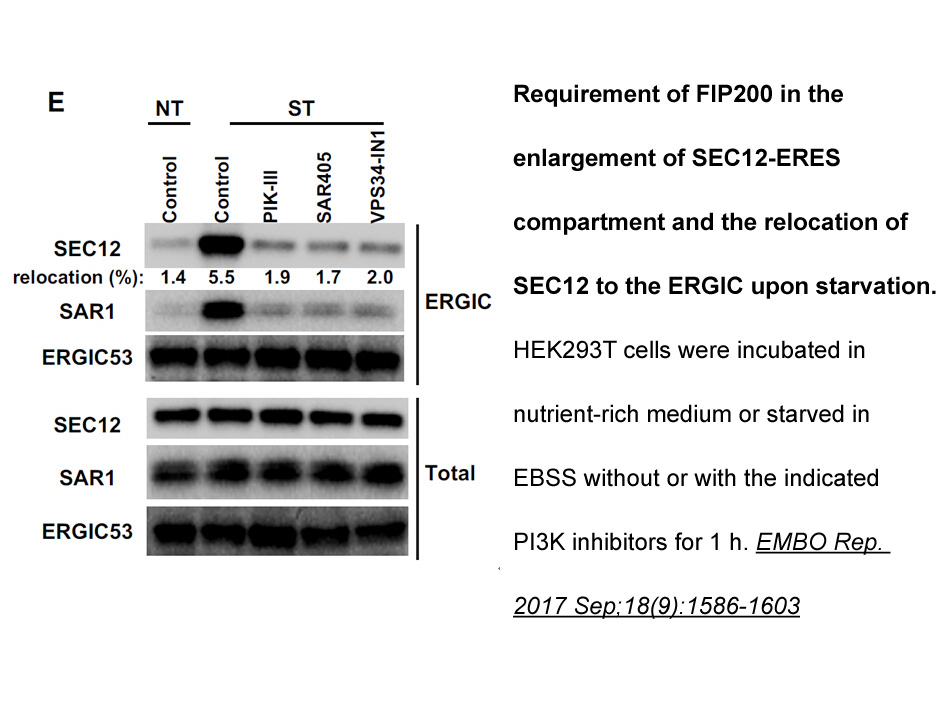
A decrease in lactate concentration in the incubation medium was observed in samples treated with heparin and 2′,5′-dideoxyadenosine compared with the control (0.05; Fig. 2B). Discussion In the present study we compared the oxidative metabolism and intracellular signals of heparin, the glycosami
-
br Disclaimer Statement br Acknowledgments
2024-03-16
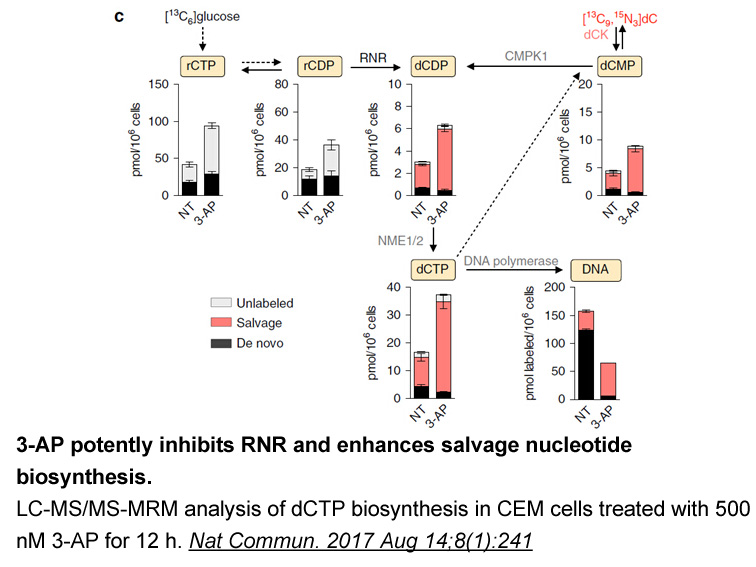
Disclaimer Statement Acknowledgments Introduction Metabolic changes are a common feature of cancerous tissues. Mutations in oncogenes and tumor suppressor genes cause alterations to multiple intracellular signaling pathways that rewire tumor cell metabolism and re-engineer it to allow enhan
16975 records 201/1132 page Previous Next First page 上5页 201202203204205 下5页 Last page